Spa Days at Riptide: Seward’s Waterfront Reset
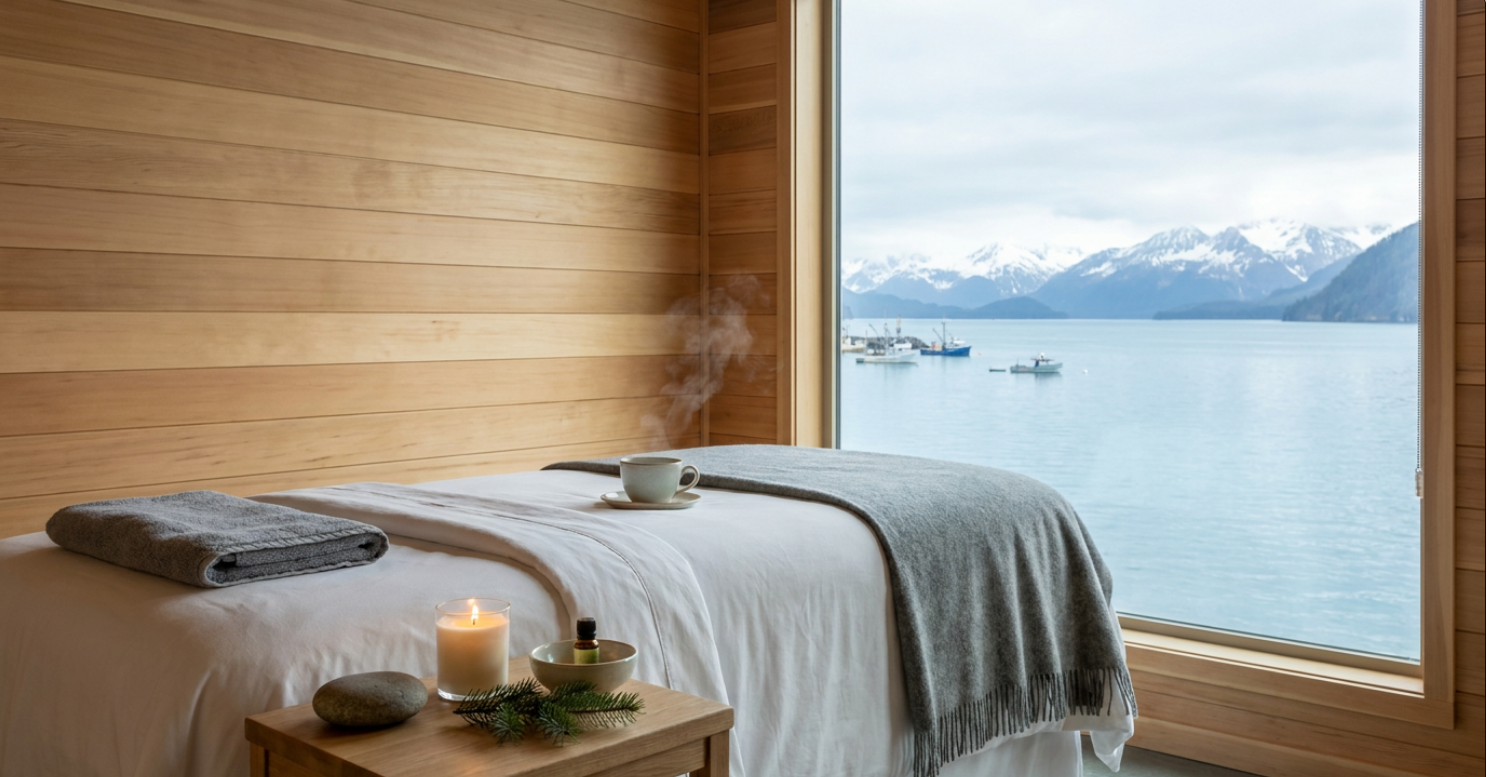
There’s a particular kind of tired that comes from a full day on Resurrection Bay — salt in your hair, wind-burned cheeks, and shoulders that remember every halibut you hauled up. Most Alaska trips send you back to the rig with that ache and a bag of frozen peas. At Riptide, you walk a few hundred feet and hand it over to a massage therapist instead.
That’s the quiet advantage of staying here. Riptide RV Resort sits on the banks of Resurrection Bay in Seward, with private shore access surrounded by water and mountain views — ideal for anglers and anyone looking for a relaxing retreat.
On the property you’ll find a convenience store, a spa, laundry facilities, Wi-Fi, restrooms with showers, full list of on-site services → RV Riptide Services
This guide goes deep on the spa - what’s offered, how to time your appointment, who each treatment suits - and then covers the practical stuff: hookups, rates, check-in rules, packing, and how to build a Kenai Peninsula week around a basecamp that actually lets you recover.
Why an RV Resort Spa Is Not a Gimmick
Ask anyone who’s driven the Seward Highway with a 34-foot rig what it does to a lower back. Then add a glacier hike, a kayak day, a 5 a.m. charter, and four nights in a bed two inches narrower than the one at home. By day five, plenty of travelers are quietly rationing ibuprofen.
The math is simple. Alaska trips are physically demanding in a way that beach vacations aren’t. Recovery isn’t a luxury add-on here — it’s what keeps day six as good as day one.
Having treatment rooms on-site removes the two things that normally kill a spa plan on the road: driving into town and finding parking for a rig. You finish your appointment and you’re back at your picnic table in ninety seconds. spa details and treatment menu
What the Spa at Riptide Offers
Professional therapists provide a range of services from massages to facials, helping guests unwind in the resort’s tranquil coastal setting. Relaxation services are available through Seward’s Resurrection Spa, and the property is known locally for its spa and sauna offerings.
Here’s how the menu breaks down in practical terms, and who each option is actually for.
Therapeutic & Deep-Tissue Massage
Firm pressure aimed at the specific knots that build up from long driving days, reeling, and hauling gear. Best booked after your most physical day, not before it.
Best for: anglers, hikers, anyone who just drove in from Anchorage or the Alaska Highway.
Relaxation & Swedish Massage
Lighter, slower, more about the nervous system than the muscle fiber. If you’ve been running a tight itinerary — glacier, boat tour, SeaLife Center, dinner, repeat — this is the reset button.
Best for: rest days, retirees, first-time massage guests, anyone who finds deep tissue too intense.
Facials
Underrated on an Alaska trip. Between salt spray, coastal wind, and the dry heat of an RV furnace, skin takes a beating up here. A facial mid-trip makes a visible difference by the time you’re taking photos at Exit Glacier.
Best for: long-haul travelers, anyone spending consecutive days on open water.

Insider Timing Tips for Booking the Spa
A few patterns we’ve noticed from watching guests book across a season:
Reserve your spa slot when you reserve your site. Seward is a compact town with a limited number of therapists. July weekends go first, and they go early. [LINK: reserve a site + spa]
Book the afternoon after your charter, not the morning of. Post-fishing is when muscles actually need attention, and you won’t spend the session watching the clock.
Rainy days are gold — and crowded. Seward gets weather. When a boat tour cancels, the spa becomes the best plan B on the property. So does everyone else’s plan B. Call early.
Go mid-trip, not end-of-trip. If you’re touring Alaska for two or three weeks, a reset in week one keeps you hiking through week three. A massage on your last afternoon is pleasant; a massage in the middle is strategic.
Pair the sauna with an early dinner. Heat, then food, then fire ring. It’s a very hard evening to improve on.
Traveling as a couple? Ask about back-to-back appointments. Coordinating two sessions in sequence beats splitting your afternoon in half.
Small Practical Notes Before You Go In
Arrive ten minutes early. The property is walkable, but gravel plus rain boots plus Alaska weather adds minutes.
Bring slides or flip-flops if you’re coming straight from your rig.
Hydrate afterward. Deep-tissue work plus a full day of salt air will dry you out faster than you’d expect.
Flag any injury, spine issue, or recent surgery upfront so your therapist can adjust pressure.
Skip the heavy meal beforehand — a light snack is fine, a halibut platter is not.
Silence the phone. You’re two miles from town and there is genuinely nothing that can’t wait an hour.
Two Ways to Build a Spa Day Into Your Itinerary
The Angler’s Day
5:30 a.m. — coffee, gear check, drive to the small boat harbor
6:00 a.m. — charter departs
3:00 p.m. — back at the dock, fish processed and packed
4:30 p.m. — deep-tissue massage on-site
6:00 p.m. — sauna
7:00 p.m. — fire ring, fresh salmon, sea otters offshore
The Rest Day
Slow morning, coffee at the shoreline
Late-morning facial
Lunch downtown, browse the historic waterfront district
Afternoon walk or an easy shoreline stroll
Evening sauna, then an early night
Sites, Hookups, and Everything Else On-Site
There are full hookups for 22 RVs, plus 45 sites with electric and plenty of dry sites, each with a picnic table and fire ring. Full-hookup sites include clean water, sewer, and electrical service for rigs of various sizes. The park lists 30-amp electric, water, and sewer hookups — contact the resort directly if you have a specific rig length or amperage requirement.
Hookup tips from experience:
Bring a surge protector. Always, everywhere, but especially in coastal Alaska where moisture and electricity don’t mix politely.
Pack a 30 amp dogbone adapter if you run a 30-amp rig.
Carry at least 25 feet of fresh water hose and a 20-foot sewer hose. Site geometry varies along the waterfront layout.
Bring leveling blocks. Coastal ground is coastal ground.
Coastal humidity is real. A small dehumidifier or a few moisture absorbers keep your closets from smelling like low tide by day four.
Grey water fills faster than you think when everyone’s rinsing gear. Plan accordingly.
Cabins for the Non-RV Crowd
Five luxury cabins are also available, fully furnished for vacation stays. Handy when family flies in to join your road trip and doesn’t happen to own a motorhome.
.jpg)
The Camp Store
The on-site camp store is stocked with essential groceries, ice, snacks, and camping supplies, along with souvenirs. Consider it your forgotten-the-coffee-filters insurance policy at 6 a.m. — and your ice source on fish days.
Fishing: The Reason Most Guests Come
Guests can access premium fishing spots, with equipment rental and expert guidance available. Shore fishing on Resurrection Bay is right here, and the Seward small boat harbor is nearby for halibut, salmon, and rockfish charters. Riptide bills itself as the only beach fishing resort in town, giving guests direct beach fishing access.
A few notes for first-timers:
Book charters well ahead for July and early August.
Ask your operator about fish processing and shipping before you sail, not after.
Layer more than you think you need. Bay mornings run cold even in midsummer.
Motion sickness meds work best taken the night before and the morning of.
Then book your massage for that afternoon. Seriously.
Wildlife, Views, and What’s Nearby
The resort is a birder’s paradise, with dozens of species across the forests and tidelands and bald eagles essentially everywhere you look. The property sits between the Resurrection River to the west, Sawmill Creek to the east, and Resurrection Bay to the south.
Kenai Fjords National Park is close on both fronts — boat tours depart from the Seward harbor, and Exit Glacier, the park’s only road-accessible area, is a short drive inland. Town is near enough that restaurants, outfitters, and the Alaska SeaLife Center don’t require repacking the rig.
Planning Your Stay
When to Come
Peak season runs mid-May through mid-September, and waterfront sites are limited. Summer in Seward is genuinely busy, and campsites fill months in advance.
Late May and early September are the sleeper picks: fewer crowds, cooler air, easier spa scheduling, and better odds on a waterfront site.
What to Pack for Alaska Specifically
Rain shell and rain pants — not optional
Insulated waterproof boots
Layers, including one genuinely warm mid-layer for July
Blackout curtains or a sleep mask (June light does not quit)
Bug spray for inland hikes
Binoculars — the eagles are worth it
A cooler or a fish-shipping plan if you’re chartering
Slides and a robe or hoodie for spa and sauna trips across the property
The Takeaway
Alaska trips tend to be ambitious. Glaciers before lunch, a charter the next morning, a hike after that. What separates a great trip from an exhausting one is having somewhere that lets you recover between adventures.
Riptide is built around a straightforward idea: put travelers close to the water, close to town, and close to the trailheads and charter docks that draw people to the Kenai Peninsula in the first place. Full hookups take care of the rig. The spa takes care of you. Together they make the pace sustainable.
If Seward is on your route this season, take a look at open dates and waterfront sites at Riptide RV Resort — and book your spa appointment at the same time. Your shoulders will thank you somewhere around day four.